Posted By Paul Kafasis on September 3rd, 2011
Update (September 26th, 2011): Airfoil for Windows 3.1 is now out! Get it now:
https://rogueamoeba.com/airfoil/windows/
Almost exactly two months ago, we released version 4.5 of Airfoil for Mac. This update brought a major new feature to Airfoil Speakers running on the Mac – the ability to receive audio from iOS and iTunes. With this, it’s now possible to send audio from an iOS device, as well as from iTunes, directly to a Mac running Airfoil Speakers.
This feature is very handy, and it’s been very well received. However, it hasn’t found its way to Windows yet. That’s about to change, as the next version (3.1) of Airfoil for Windows will include an update to Airfoil Speakers which enables it to receive audio from iOS and iTunes as well!
What’s with the future tense? Well, version 3.1 of Airfoil for Windows isn’t quite ready to ship to the public at large just yet. We want to be sure this functionality is rock-solid, so we need your help in testing. The new version has been tested internally for daily use, so now we’re ready to push it out to a wider pool of testers. Interested in sending audio from iOS or iTunes to your Windows machine? Download a public beta of version 3.1 of Airfoil for Windows right here.
How to Use It
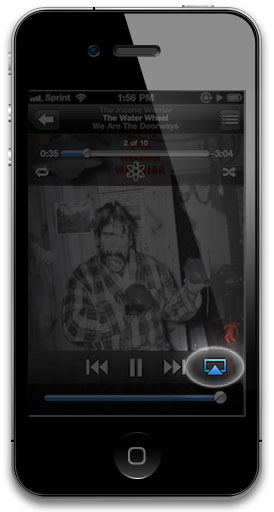
To get started testing this functionality, download the public beta above and install it on all your machines. Once you’ve got it installed, just launch Airfoil Speakers, and it will appear in the list of AirPlay devices on iOS (with the name set in your Airfoil Speakers’ preferences – your machine name by default). When you play audio in an app on your iPhone, iPod Touch, or iPad, you can select Airfoil Speakers from the AirPlay list, and you’ll hear the audio right on your Windows machine.

Send audio from your iOS device right to your Windows machine
Airfoil Speakers remains a complimentary add-on for Airfoil, but if you’re using it on its own (without Airfoil), you’ll want to be sure to enter your Airfoil license into Airfoil Speakers to ensure it’s fully unlocked.
Feedback
If it works, great! Just keep using it until the official Airfoil 3.1 arrives (you’ll be alerted to the update when it ships). If you run into any problems, just use the all-new in-app support form (found in the Help menu) to let us know.

 Airfoil
 Audio Hijack
 Farrago
 Fission
 Loopback
 Piezo
Piezo
 Soundsource

 It’s been something of a hiring whirlwind here at Rogue Amoeba, with the recent additions of Grant Farr and Jose Vazquez. Today, we’ve got yet another new face, in the form of Ed Wynne. Eagle-eyed readers will recognize Ed’s name from our About boxes, as Ed’s done a good deal of contract work for Rogue Amoeba over the years. He’s one of the brains behind the hijacker, which powers the audio capture used in Airfoil, Audio Hijack Pro, and Nicecast. Now, we’ve brought him on full-time to help us hack away.
 Two months ago, we introduced our then-newest hire


You must be logged in to post a comment.